Traffic without conversion is an expensive problem. Yet most UK startups focus almost entirely on getting traffic — through SEO, ads, or social — without fixing the fundamental reason visitors leave without converting. Here are seven changes that consistently move conversion rate, drawn from real landing page analysis.
1. Lead With the Transformation, Not the Tool
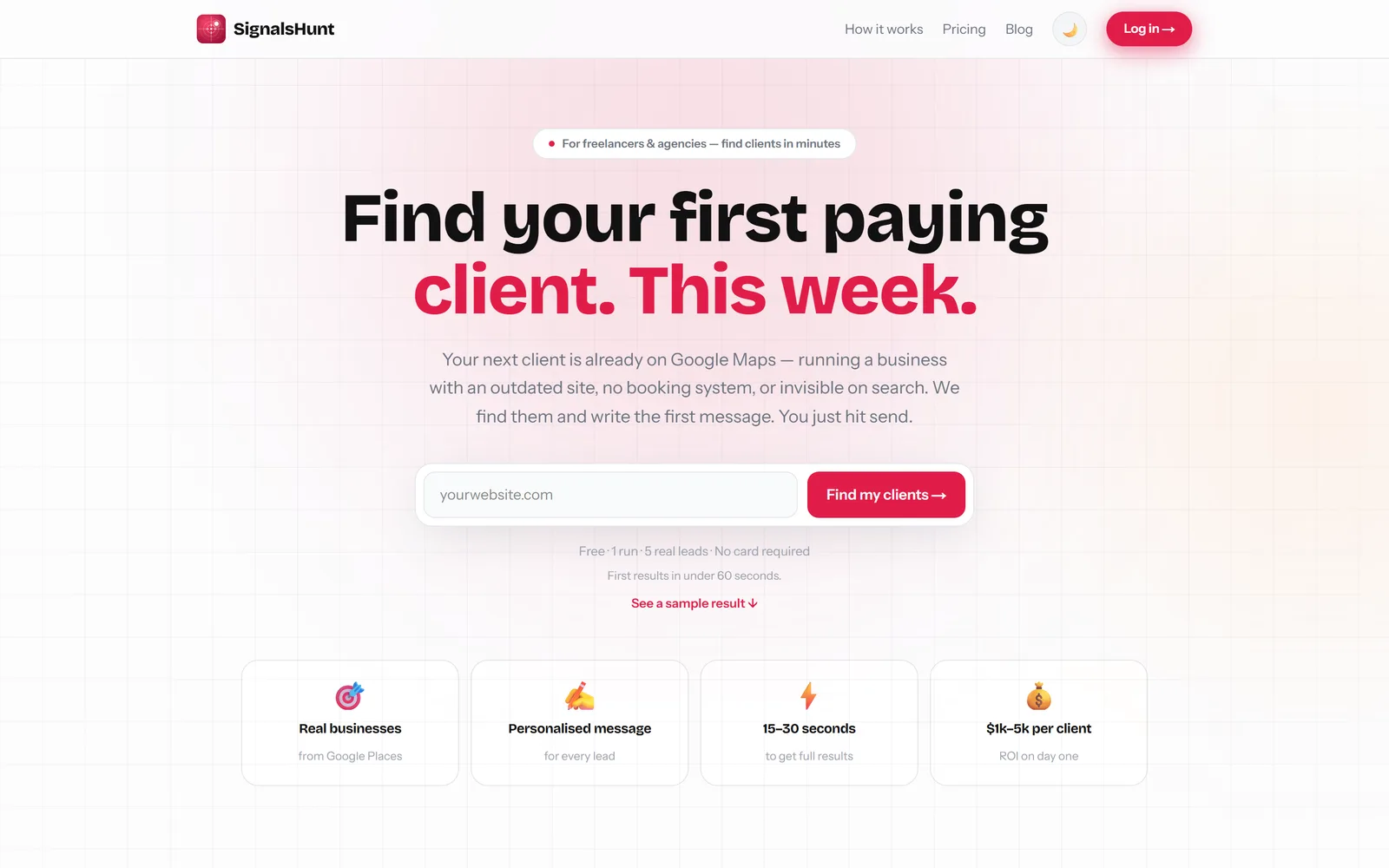
UK startup landing pages almost universally start with what the product is rather than what it does for the customer. "AI-powered project management software" tells a visitor nothing they care about. "Ship projects on time without the weekly status meeting" tells them exactly what they'll gain.
The most effective hero headlines in 2026 follow a simple structure: [Specific outcome] for [Specific customer] — without [Primary frustration]. Rewrite your hero headline using this frame before changing anything else.
2. Put Social Proof Where It Changes Decisions
Testimonials at the bottom of the page are mostly invisible. Research consistently shows that social proof placed in the hero section or immediately below it — before the visitor has decided whether to trust you — has significantly more impact than the same content placed at the end.
For UK audiences specifically, social proof that includes company logos, industry specifics, or recognisable UK geography ("a Manchester-based fintech") outperforms generic testimonials. Specificity signals authenticity.
3. Match Your CTA to the Visitor's Readiness
A "Buy now" CTA on a page targeting cold traffic will underperform a "See how it works" CTA for the same audience. UK buyers, particularly in B2B, require more trust-building before committing.
The fix: use a two-CTA structure. Primary CTA for ready visitors ("Start your free trial"), secondary CTA for those who need more ("See a 2-minute demo"). This captures both without forcing a binary decision.
4. Mobile Performance Is Non-Negotiable
Over 70% of UK web traffic arrives on mobile. If your landing page takes more than three seconds to load on a mid-range Android device, you're losing the majority of your potential conversions before the page has even appeared. The data on how website speed affects conversion rate is stark — every second of delay measurably reduces sales.
This isn't a design problem — it's a technical one. Page speed is primarily determined by your tech stack, image optimisation, and hosting infrastructure. A well-built Next.js landing page on Vercel will consistently outperform a page builder-based equivalent. See our landing page services for what this looks like in practice.
5. Remove Navigation from Dedicated Landing Pages
Every link in your navigation is an escape route from your conversion funnel. Visitors who click "About" or "Blog" and spend five minutes reading are unlikely to return to convert. On pages built specifically to convert — ad landing pages, product launch pages, campaign pages — remove the main navigation entirely.
Keep your logo (linking to the homepage) and a single CTA in the header. Nothing else. This feels counterintuitive, but the data is consistent: removing navigation increases conversion rate on focused landing pages.
6. Name and Neutralise the Primary Objection
Every offer has one primary objection — the single thought that stops most visitors from converting. For paid services, it's almost always price. For free offers, it's usually privacy ("what will you do with my data?") or commitment ("will I get spammed?").
Most landing pages ignore the objection and hope visitors will push through it. The far more effective approach is to name it directly and answer it, close to the CTA: "No credit card required. Cancel anytime." or "We don't share your details. You'll only hear from us about your project."
Naming the objection builds trust. It signals that you understand your customers and have nothing to hide.
7. Test Your Copy, Not Just Your Design
UK founders spend time debating button colours and font choices when the biggest conversion gains usually come from copy changes. A different headline, a reframed CTA, or a stronger testimonial consistently outperform design tweaks.
The most impactful test you can run: write three versions of your hero headline and test them. Use an A/B testing tool like PostHog or GrowthBook (or run a simple split test manually over two weeks by changing the page and comparing analytics). One of the three will almost always significantly outperform the others.
Putting It Together
These seven changes work because they address the actual reasons visitors don't convert: distrust, uncertainty about the outcome, slow load times, cognitive overload, and unanswered objections. Fixing these is more valuable than any additional traffic you could drive to the same page.
For more tactics on lifting page performance, see our piece on landing page changes that double conversion rate.
If you want your landing page reviewed alongside a technical SEO audit, request your free audit — we cover both in one report.
Ready to grow your business online? Get your free audit →